


 Tiếng Việt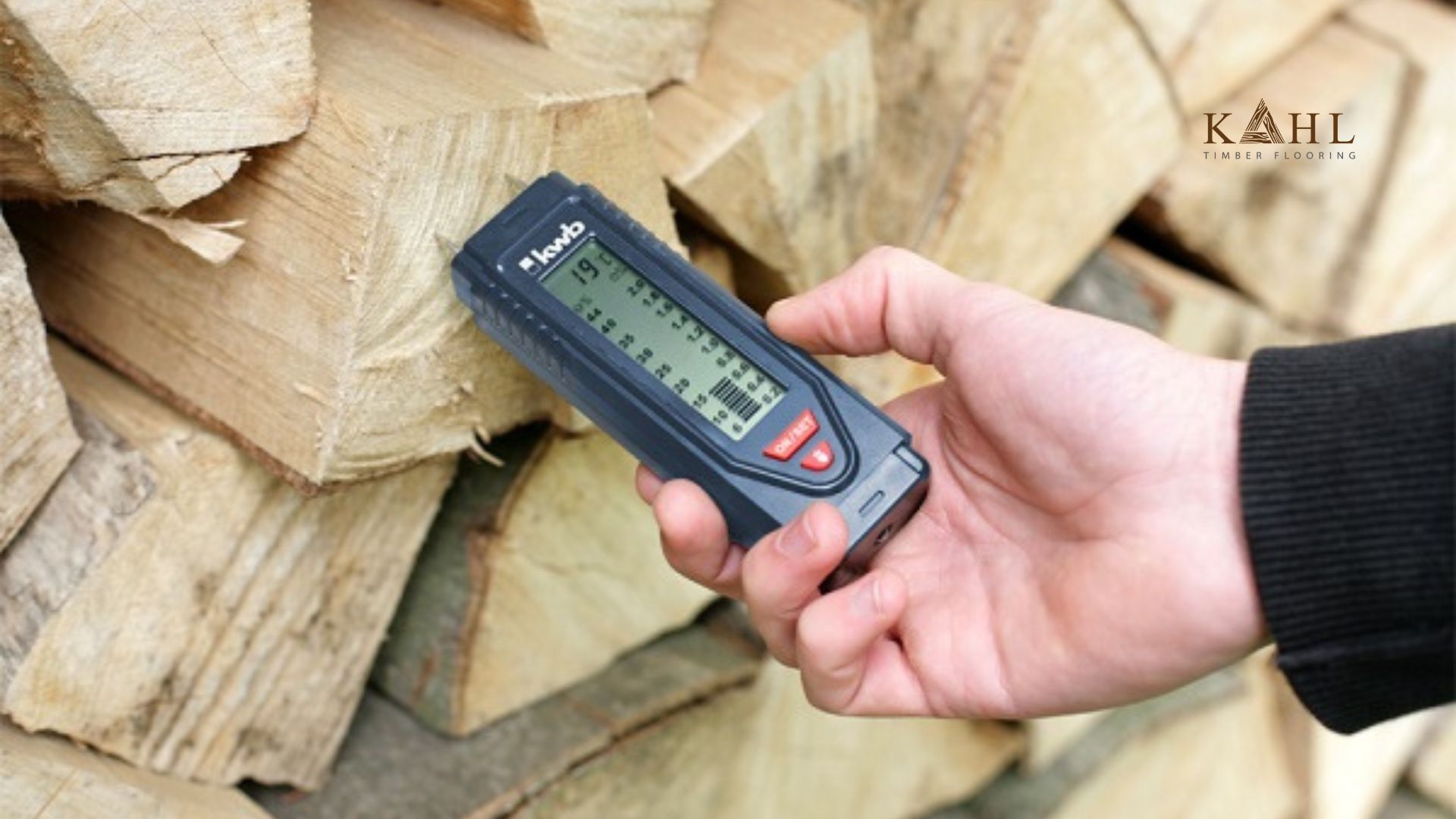
WHAT IS WOOD EXPANSION? HOW DOES IT AFFECT WOOD FLOORING?
02/06/2025 2532
Currently, the swelling rate of wood is used to evaluate the water resistance of different wood types.
This is an important criterion in assessing a wood’s resistance to moisture, which directly affects the durability and lifespan of wood flooring.
Although wood is a natural material that brings warmth and beauty, it is very sensitive to humidity. When exposed to moisture for an extended period, wood can deform, swell, or shrink. So, what exactly is the wood swelling rate, what causes it, and how can you choose the most suitable type of flooring? This article will answer those questions and provide helpful advice to help you choose the best flooring material.
1. What is the swelling rate of wood?
The swelling rate of wood (also known as the wood expansion coefficient) measures the dimensional change of wood when exposed to moisture. Wood has hygroscopic properties, meaning it absorbs moisture from the environment. When humidity changes, the wood expands or contracts, potentially causing deformation that impacts the aesthetics and structural integrity of the floor.
Specifically, the swelling rate is calculated as a percentage of change in the wood’s length, width, or thickness when humidity changes by 1%. Different wood types have different swelling rates, depending on their origin, fiber structure, and environmental conditions where the wood is used.
- The swelling rate of wood measures how its dimensions change when exposed to moisture.
2. What causes the swelling of wood?
The main reason for wood swelling is its natural ability to absorb water. In high-humidity environments, wood absorbs moisture and expands. Conversely, in low-humidity environments, wood releases moisture, leading to shrinkage.
Additionally, the structure and type of wood also influence the swelling rate. For example, wood with dense fibers tends to swell less than wood with loose fiber structures. The chemical composition of the wood also plays a role in its moisture responsiveness.
3. How does swelling affect wood flooring?
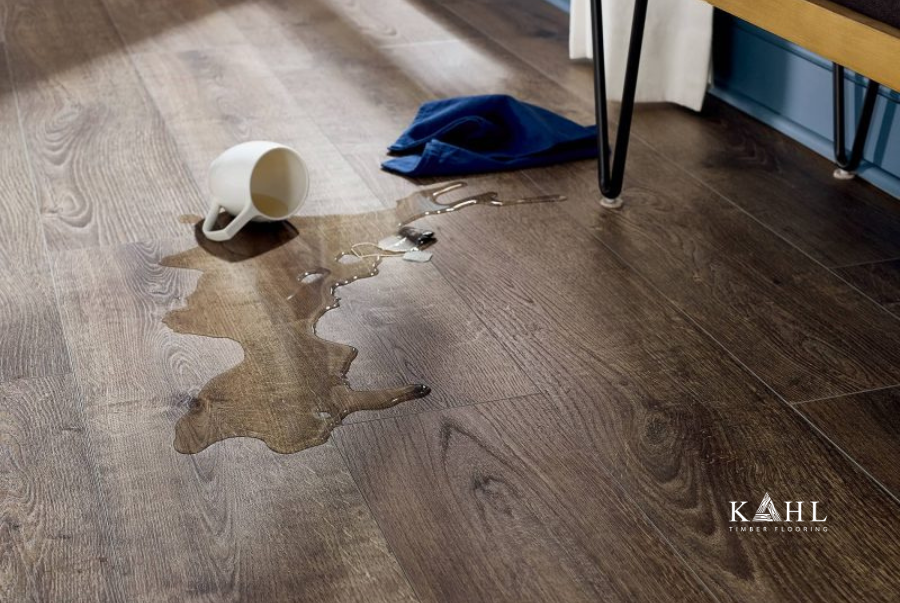
The swelling rate of wood directly impacts the durability, aesthetics, and functionality of wood flooring. When floorboards are exposed to changing humidity levels, expansion or contraction occurs, which can result in issues such as cracking, open seams, or surface warping.
For instance, if wood flooring is installed in high-humidity areas and the type of wood used has a high swelling rate, over time gaps may appear between the boards, diminishing the floor’s visual appeal and creating discomfort when walking.
This not only reduces the floor’s aesthetic value but also shortens its lifespan. In worst-case scenarios, full floor replacement may be necessary, leading to costly and inconvenient repairs.
To minimize the impact of moisture, manufacturers continually seek solutions to reduce wood’s sensitivity to humidity. One approach is selecting wood types with high dimensional stability, which are less affected by environmental changes. Additionally, modern wood treatments such as heat compression and pressing help reduce swelling significantly.
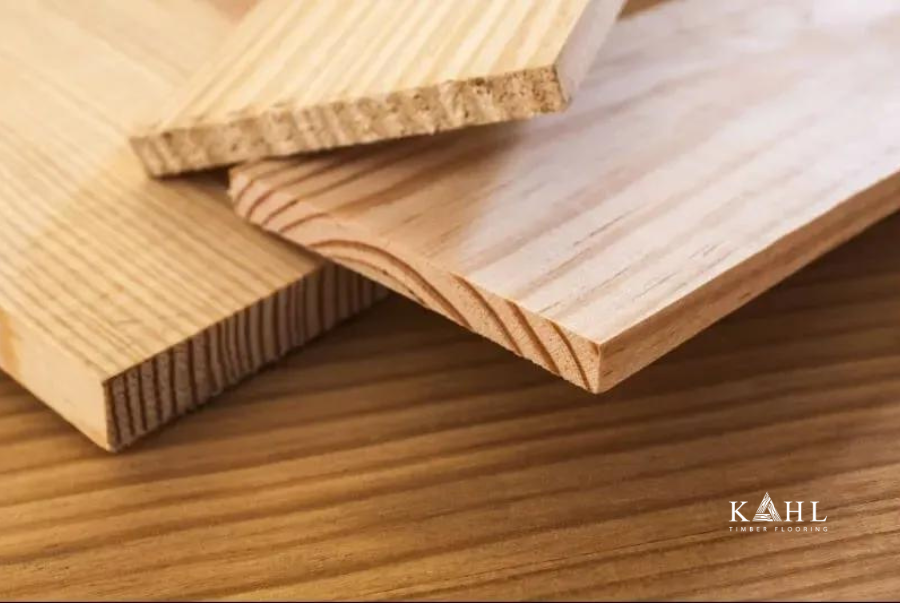
- Manufacturers are constantly improving moisture resistance to enhance wood flooring performance.
4. Evaluating the swelling levels of wood
To determine a wood type’s swelling level, a common test involves soaking the wood in water for 24 hours to assess its water resistance. Below are the typical swelling resistance levels:
-
Level 1: Under 18%
Basic moisture resistance. Commonly used in standard laminate flooring. While affordable, it lacks strong durability and is suitable only for low-humidity environments. -
Level 2: Under 12%
Better water resistance, suitable for residential projects such as apartments or condos. However, still not considered high-grade. -
Level 3: Under 10%
Good water resistance, less prone to deformation when exposed to water. Ideal for upscale apartments or areas with high humidity. -
Level 4: Under 8%
Excellent moisture resistance. Perfect for high-end projects requiring both durability and aesthetic appeal. -
Level 5: Under 5%
Superior moisture resistance—the highest quality grade. Can withstand prolonged exposure to high humidity without warping or deforming.
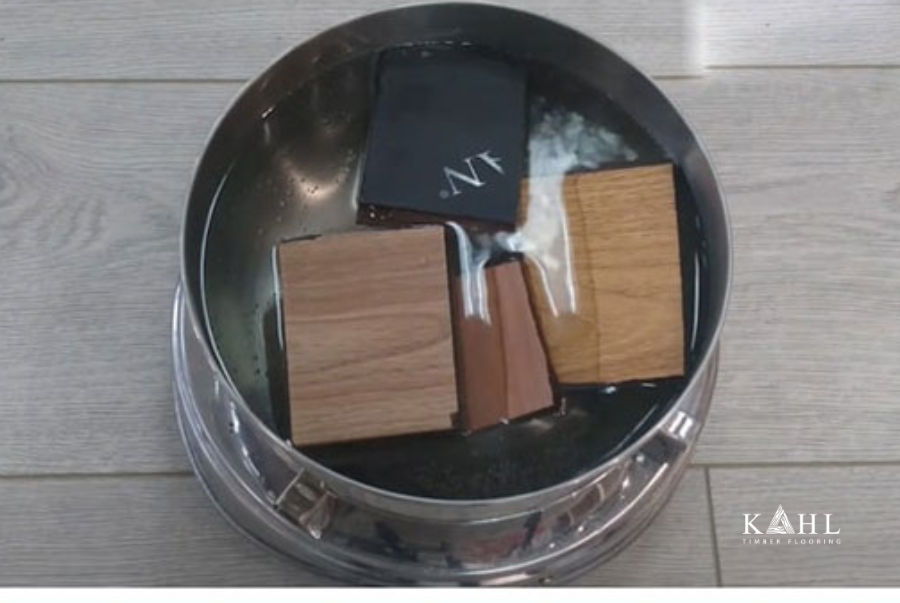
- Wood is soaked for 24 hours to evaluate its moisture resistance.
5. So, which swelling level should you choose for your flooring?
When choosing flooring, consider factors such as environmental conditions, usage needs, and your budget:
-
Residential homes and apartments: Flooring with swelling rate Level 3 or above is appropriate.
-
Low-humidity areas (e.g., Southern Vietnam): Levels 1, 2, or 3 are acceptable.
-
High-humidity areas (e.g., Northern Vietnam or coastal regions): Levels 3, 4, or 5 are recommended.
Wood flooring manufacturers often apply waterproofing technology to reduce swelling, increasing durability and quality. However, consumers should note: the higher the swelling rate, the lower the water resistance, and vice versa.
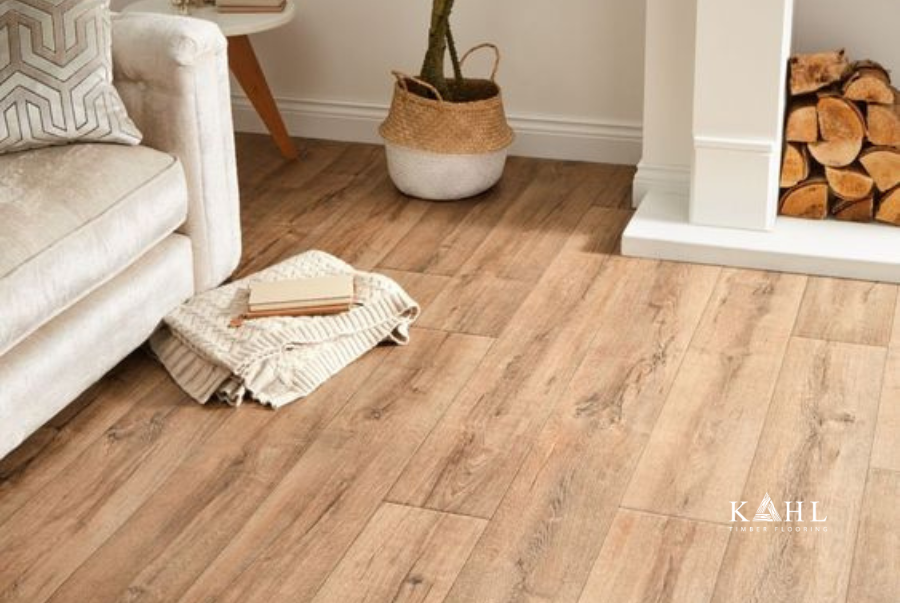
- Always consider environment, usage, and budget when choosing flooring.
6. KAHL Wood Flooring – A trusted brand for high-quality flooring
The swelling rate is a key factor to carefully consider when selecting wood flooring. By understanding this property and its implications, you can make smarter choices to ensure your flooring meets both aesthetic and durability expectations—while staying within budget.
With KAHL Wood Flooring, you can be completely confident in the quality and low swelling rate of our products. Every KAHL flooring product undergoes strict quality control and moisture testing before reaching the market.